

Hi, How Can We Help You?
  • Level 3, 58 Kitchener Pde, Bankstown Sydney NSW
  • contact@emkglobal.com.au
  • (+61) 487 026 666

Tag Archives: International Students Australia

August 3, 2026

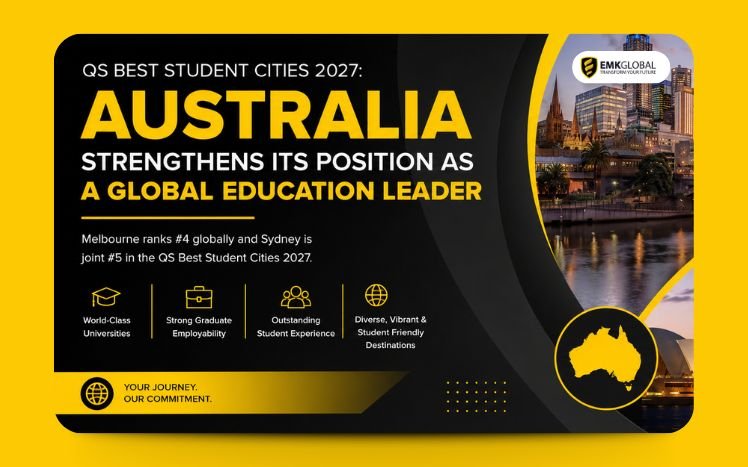
The latest QS Best Student Cities 2027 rankings have once again highlighted Australia as one of the world’s most attractive destinations for international students. With Melbourne ranked #4 globally and Sydney securing a joint #5 position, Australia continues to demonstrate why it remains a preferred study destination for students seeking high-quality education, excellent career prospects, and an exceptional lifestyle. 

Published annually by QS Quacquarelli Symonds, the Best Student Cities ranking evaluates 150 cities worldwide based on factors that matter most to students, including university rankings, graduate employability, affordability, student diversity, quality of life, and student satisfaction. 

As global competition for international education continues to grow, the 2027 rankings also reveal the increasing influence of Asia-Pacific cities, while Australia continues to maintain its reputation as one of the world’s leading education hubs.

QS Best Student Cities 2027 – Top 10 Rankings

According to the latest QS rankings, the world’s leading student cities are: 

  1. Seoul 
  1. Tokyo 
  1. London 
  1. Melbourne 
  1. Sydney (Joint with Munich) 
  1. Munich 
  1. Berlin 
  1. Paris 
  1. Zurich 
  1. Vienna 

Melbourne and Sydney’s positions within the global Top 5 reinforce Australia’s commitment to delivering world-class education combined with an outstanding student experience. 

Why Melbourne and Sydney Continue to Attract International Students 

Australia has consistently been one of the most popular destinations for students from around the world, offering internationally recognised qualifications, multicultural communities, and excellent post-study opportunities. 

World-Class Universities 

Melbourne and Sydney are home to some of Australia’s highest-ranked universities, renowned for academic excellence, innovative teaching, cutting-edge research, and strong industry connections. Graduates from Australian institutions are recognised globally, making Australian qualifications highly valued by employers worldwide. 

Strong Graduate Employability 

One of the key indicators in the QS rankings is Employer Activity, reflecting how well graduates are prepared for employment. 

Australia continues to perform strongly in this area, with universities maintaining close partnerships with industry and offering internships, practical learning experiences, networking opportunities, and career development services that prepare students for successful careers. 

Outstanding Student Experience 

Beyond academics, Melbourne and Sydney provide an exceptional quality of life. 

International students benefit from: 

  • Safe and welcoming communities 
  • Excellent public transport 
  • Modern healthcare services 
  • Diverse cultural experiences 
  • Vibrant food, arts, and entertainment scenes 
  • Access to beaches, parks, and outdoor activities 

These factors contribute to an enriching student experience both inside and outside the classroom. 

Asia-Pacific Continues to Rise in Global Education 

The 2027 rankings also highlight the growing strength of Asia-Pacific as a global education destination. 

Several cities recorded impressive improvements this year, including: 

  • Singapore (#11) 
  • Beijing (#12) 
  • Taipei (#14) 
  • Kuala Lumpur (#15) 
  • Kyoto (Improved ranking) 

The continued rise of these cities reflects increasing investment in higher education, innovation, graduate employability, and international student support. 

Meanwhile, several North American cities experienced declines due to rising living costs and affordability challenges, making Asia-Pacific destinations increasingly attractive for students seeking both quality education and better value. 

How QS Determines the Best Student Cities 

The QS Best Student Cities rankings evaluate destinations using a range of important indicators, including: 

  • University rankings and academic reputation 
  • Employer activity and graduate employability 
  • Affordability and cost of living 
  • Student diversity 
  • Student satisfaction and overall experience 
  • Desirability, safety, and quality of life 

Together, these indicators provide students with a comprehensive understanding of which cities offer the best overall study experience. 

Choosing the Right Study Destination 

While global rankings provide valuable guidance, choosing where to study should also align with individual goals, career aspirations, preferred lifestyle, and financial circumstances. 

Australia continues to offer excellent opportunities across a wide range of study areas, including: 

  • Business 
  • Information Technology 
  • Engineering 
  • Health Sciences 
  • Early Childhood Education 
  • Hospitality 
  • Construction 
  • Community Services 
  • Nursing 
  • Accounting 

Whether pursuing vocational education, undergraduate studies, or postgraduate qualifications, selecting the right city and institution can have a significant impact on both academic success and future career opportunities. 

Begin Your Study Abroad Journey with EMK Global

Choosing the right university and study destination is one of the most important decisions an international student will make. At EMK Global Education & Migration, our experienced education consultants provide personalised guidance throughout every stage of the application process. 

Our services include: 

  • University and course selection 
  • Admission application support 
  • Scholarship guidance 
  • Student visa assistance 
  • Genuine Student (GS) statement preparation 
  • Ongoing support before and after enrolment 

Whether your goal is to study in MelbourneSydney, or another leading education destination, our team is here to help turn your ambitions into reality. 

Contact EMK Global Today 

Ready to begin your international education journey? 

Contact EMK Global Education & Migration today to explore study opportunities in Australia’s top-ranked student cities and receive expert guidance tailored to your academic and career goals. 

SEO Keywords: QS Best Student Cities 2027, Study in Australia, Melbourne universities, Sydney universities, International Students Australia, Best Student Cities, Australian Universities, Study Abroad Australia, Higher Education Australia, Student Visa Australia, EMK Global Education & Migration. 


May 21, 2026

Australia’s population is projected to increase by another 1.4 million people over the next four years, according to updated Treasury Budget papers released by the Federal Government.

The revised forecasts show that net overseas migration will remain significantly higher than previously expected, highlighting the continued importance of migration in supporting Australia’s economy, workforce, and long-term infrastructure goals.

The updated projections are expected to influence discussions around skilled migration, housing demand, labour shortages, and economic growth across the country.

Australia’s Population Expected to Reach 29.4 Million

According to the latest Treasury forecasts, Australia’s population is expected to rise from approximately 28 million people to 29.4 million by 2029–30.

This population growth will largely be driven by overseas migration, which continues to play a major role in:

· filling workforce shortages

· supporting economic productivity

· strengthening regional development

· addressing skill gaps in critical industries

The revised figures confirm that Australia remains heavily reliant on migration to sustain long-term economic growth

Net Overseas Migration Forecast Revised Upwards

One of the biggest changes in the Budget papers is the increase in net overseas migration forecasts.

2025–26 Migration Forecast

Net overseas migration for 2025–26 is now projected at:

· 295,000 people

This is significantly higher than the earlier estimate of:

· 260,000 people

2026–27 Migration Forecast

Migration for 2026–27 is forecast to reach:

· 245,000 people

The revised figures indicate that Australia is expected to continue attracting large numbers of migrants, international students, skilled workers, and temporary visa holders over the coming years

Skilled Migration Remains a Major Priority

The Federal Government has confirmed that the Permanent Migration Program will remain at:

· 185,000 places for 2026–27

Most of these places will continue to focus on skilled migration pathways.

The Government says migration is essential to help address ongoing workforce shortages across several industries, including:

· healthcare

· aged care

· engineering

· information technology

· construction

· infrastructure development

· education

· regional industries

Australia continues facing labour shortages in many sectors, particularly in regional areas and major infrastructure projects.

Australia Targeting Younger and Highly Skilled Migrants

The Budget papers also reveal that Australia plans to attract:

· younger migrants

· highly educated professionals

· skilled workers

· overseas tradies

· construction workers

This strategy aligns with the Government’s broader focus on improving workforce participation, productivity, and long-term economic sustainability.

Younger skilled migrants are often viewed positively because they:

· contribute to the workforce for longer periods

· help support the tax system

· reduce ageing population pressures

· strengthen economic growth

Construction workers and tradies are also expected to play an important role in helping Australia deliver housing and infrastructure projects nationwide.

State-by-State Population Growth Forecasts

The latest projections show population growth across all Australian states and territories over the next four years.

Victoria

Victoria is expected to receive the largest increase, with:

· 405,000 new residents

New South Wales

New South Wales is projected to add:

· 365,000 new residents

Queensland

Queensland is forecast to gain:

· 314,000 new residents

Western Australia

Western Australia is expected to grow by:

· 184,000 new residents

South Australia

South Australia is forecast to add:

· 50,000 new residents

Northern Territory

The Northern Territory is expected to gain:

· 8,000 new residents

Tasmania

Tasmania is also projected to receive:

· 8,000 new residents

These projections highlight the continuing concentration of migration and population growth in Australia’s major states and metropolitan regions.

Migration Continues to Drive Economic Growth

The Government says migration remains critical for maintaining Australia’s economic performance.

Key benefits identified include:

· supporting labour market demand

· boosting consumer spending

· increasing tax revenue

· improving productivity

· helping businesses fill vacancies

· supporting major infrastructure delivery

Many industries continue struggling to recruit enough local workers, making overseas migration an important part of workforce planning.

Housing and Cost of Living Concerns Continue

Despite the economic benefits, the increase in migration is also expected to intensify national discussions around:

· housing affordability

· rental shortages

· infrastructure pressure

· transport congestion

· rising living costs

Australia’s rental market remains under significant pressure, particularly in Sydney, Melbourne, Brisbane, and Perth.

Some experts argue that stronger housing supply measures will be necessary to accommodate future population growth.

The Government has stated that skilled migration and housing construction initiatives must work together to support sustainable growth.

Impact on International Students and Skilled Workers

The revised migration forecasts are likely to create continued opportunities for:

· international students

· skilled migrants

· employer-sponsored applicants

· regional visa applicants

· construction and healthcare workers

Australia remains one of the world’s most popular migration destinations due to:

· strong employment opportunities

· high quality of life

· permanent residency pathways

· world-class education system

Skilled migrants in occupations experiencing shortages may continue benefiting from strong demand across multiple visa categories.

Final Thoughts

Australia’s updated Treasury forecasts confirm that migration will remain a central part of the country’s economic and population strategy over the coming years.

With an additional 1.4 million people expected by 2029–30, skilled migration is set to continue shaping Australia’s workforce, infrastructure development, and long-term economic future.

At the same time, policymakers will face growing pressure to address housing supply, affordability, and infrastructure challenges as population growth accelerates.

For migrants, international students, and skilled workers, the latest forecasts reinforce Australia’s continued focus on attracting talented people to support national growth and workforce demand.